
Instant Gratification
Includes: Cabbage Palms, Southern Wax Myrtle, Beautyberry, Muhly Grass, and Golden Aster
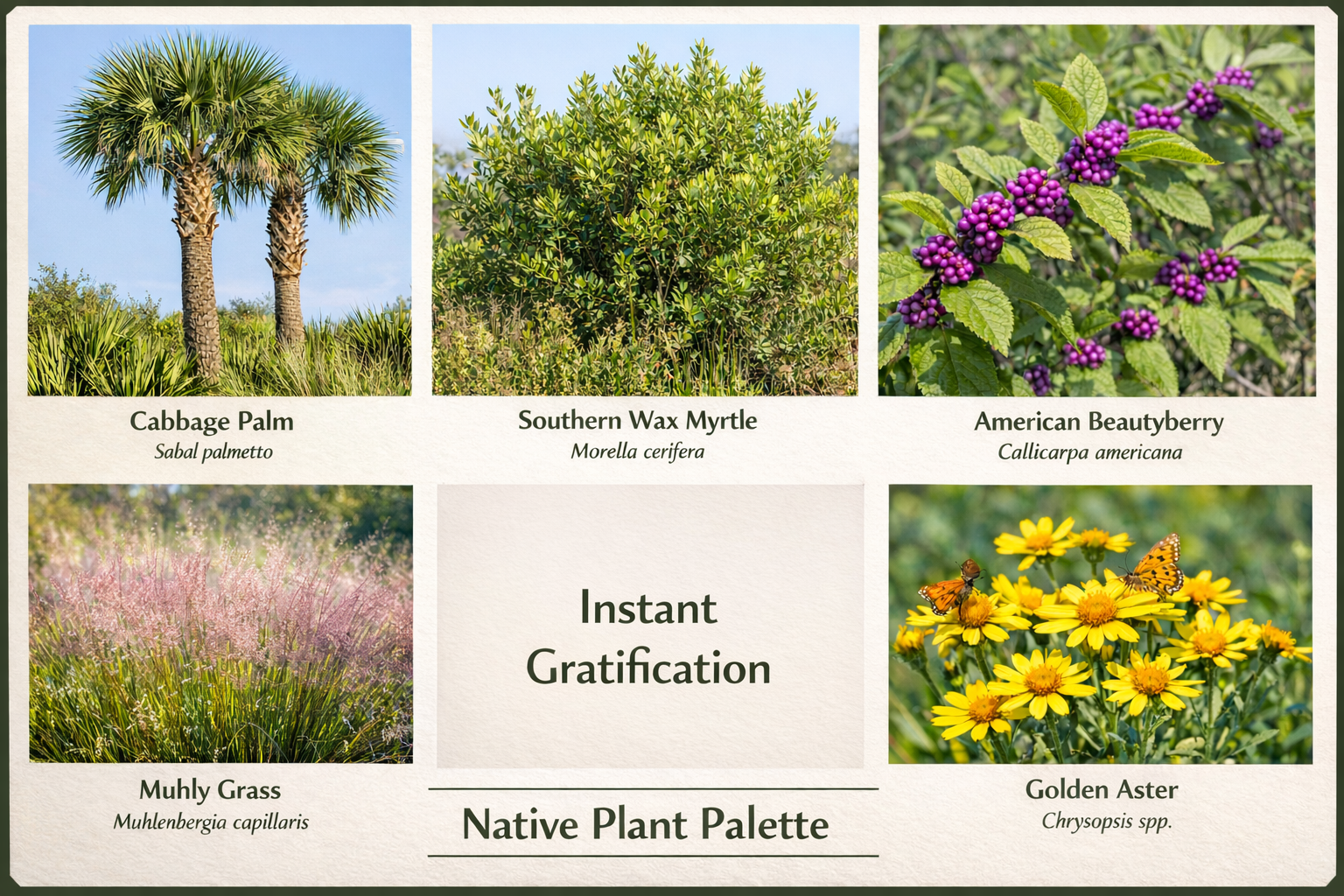
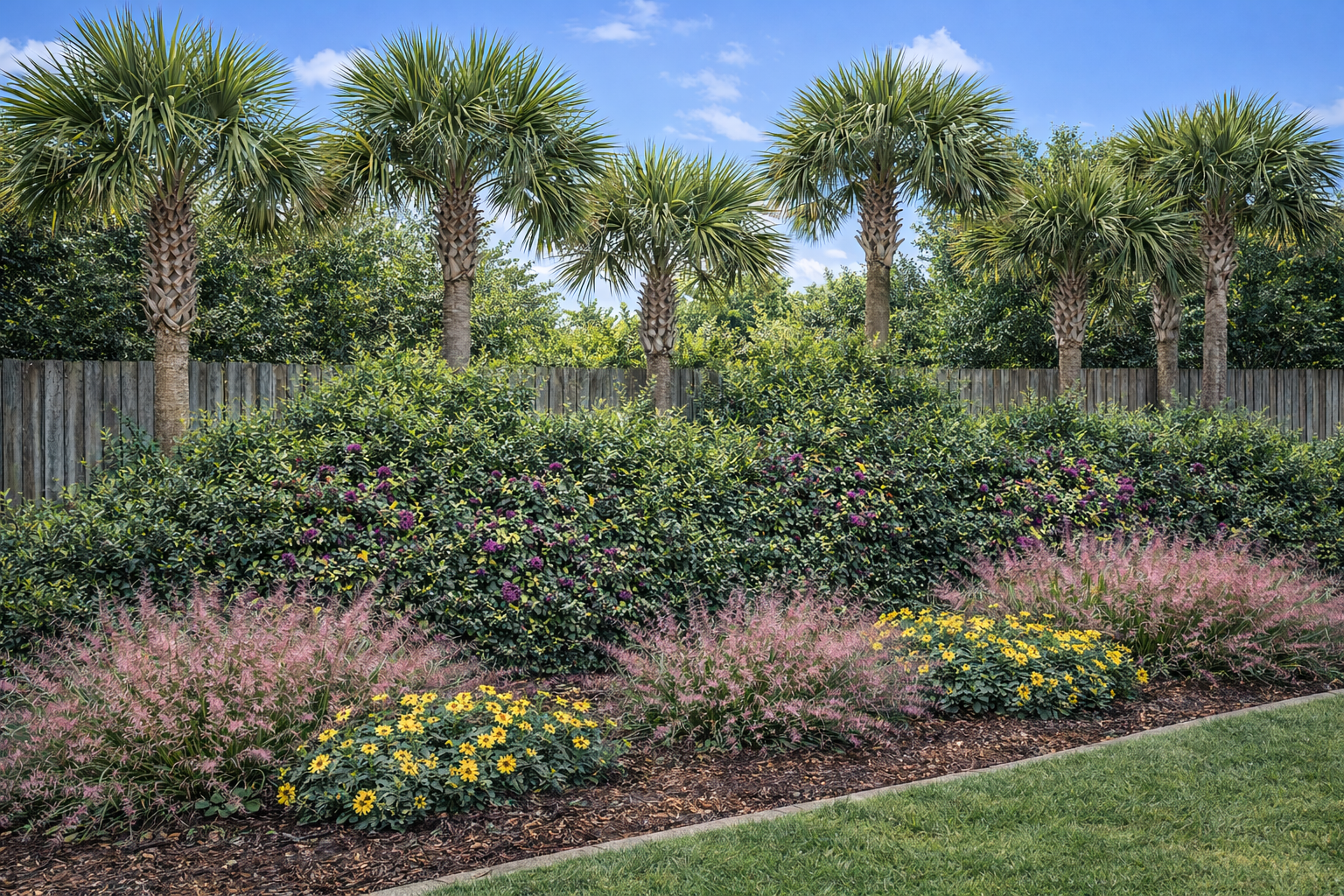
The ‘Instant Gratification’ plant combination delivers immediate visual impact and functional screening by installing mature Cabbage Palms and large specimens of Southern Wax Myrtle, American Beautyberry, and Muhly Grass. From day one, the planting reads as established, layered, and intentional, providing privacy, structure, and seasonal interest without a long wait for growth. This plant combination is appropriate for a sunny site with well-draining soil.
-
The Cabbage Palms form an open canopy that screens views while preserving sky and light, while Wax Myrtle creates a dense evergreen backbone for year-round privacy. Beautyberry is interspersed throughout the shrub layer to add texture, seasonal color, and wildlife value. In the foreground, Muhly Grass and Golden Aster are planted in naturalistic drifts, softening the edge of the bed and providing movement, color, and a finished appearance.
Beyond aesthetics, this palette offers significant ecological benefits. The plants support a wide range of wildlife, including native bees, butterflies, caterpillars, birds, and small mammals. Flowers provide nectar and pollen across multiple seasons, while fruits, seeds, and dense foliage offer food, shelter, and nesting opportunities. The layered structure closely reflects natural Florida upland and flatwoods-edge ecosystems.
Maintenance expectations are realistic and low once established. All species are Florida natives adapted to full sun and dry conditions, requiring minimal irrigation after establishment and minimal to no routine fertilization. Maintenance is largely limited to occasional pruning for access or sightlines and seasonal cleanup of grasses if desired. The result is a resilient, drought-tolerant landscape that balances immediate gratification with long-term sustainability.
See how each plant supports native wildlife below.
-
Larval Host (caterpillars)
Monk Skipper butterfly
Palm-feeding moth species (including Palm Owlet moths)
Nectar / Pollen (adult pollinators)
Native bees (including Sweat Bees and Carpenter Bees)
Honey bees
Generalist pollinating insects attracted to flower stalks
Other Wildlife Services
Fruits feed birds and small mammals
Provides nesting and roosting structure for birds
-
Larval Host (caterpillars)
Red-banded Hairstreak butterfly
Banded Hairstreak butterfly
Nectar / Pollen (adult pollinators)
Native bees
Honey bees
Butterflies and other nectar-feeding insects
Other Wildlife Services
Fruits are a high-value food source for birds (especially winter migrants)
Dense evergreen cover for nesting and shelter
Nitrogen-fixing roots improve soil health
-
Larval Host (caterpillars)
Spring Azure butterfly
Snowberry Clearwing moth
Nectar / Pollen (adult pollinators)
Native bees
Butterflies
Other small pollinating insects
Other Wildlife Services
Highly visible fruit eaten by many songbirds, including catbirds, mockingbirds, and robins.
Seasonal cover for wildlife
-
Other Wildlife Services
Seeds eaten by birds
Clumping form provides shelter for small wildlife
Ground-layer structure reduces erosion and stabilizes sandy soils
Ecosystem Services: see who each plant in this combination supports, and how.